SemaglutideTirzepatideGLP-1GLP-1 InjectionsWeight Loss InjectionsMedical Weight LossSouthwest Louisiana Weight LossCrowley LA Weight Loss ClinicLouisiana Medical Weight LossHealthy Solutions ClinicAppetite SuppressantsGLP-1 vs TirzepatideSemaglutide vs TirzepatidePrescription Weight LossPhysician-Led Weight LossWeight Loss ClinicMetabolic HealthObesity TreatmentInjectable Weight LossTirzepatide Weight LossSemaglutide Weight Loss
Tirzepatide vs Semaglutide: Which Weight Loss Injection is Right for You?

Tirzepatide vs. Semaglutide — Choosing the Right Injection for Your Medical Weight Loss Plan
By Daniel Wiltz, M.D., Healthy Solutions Clinic
Tirzepatide and semaglutide are two prescription injections that have changed how clinicians approach medical weight loss. Both drugs act on hormones that control appetite and metabolism, helping many people reduce calorie intake and improve metabolic health. This article explains how each medication works, what the clinical evidence shows, and practical differences in side effects and cost so you can discuss the best option with your provider. If you’ve struggled with weight management, understanding these differences can help you make an informed choice that fits your health goals.
What Are Tirzepatide and Semaglutide? Understanding Weight Loss Injection Options
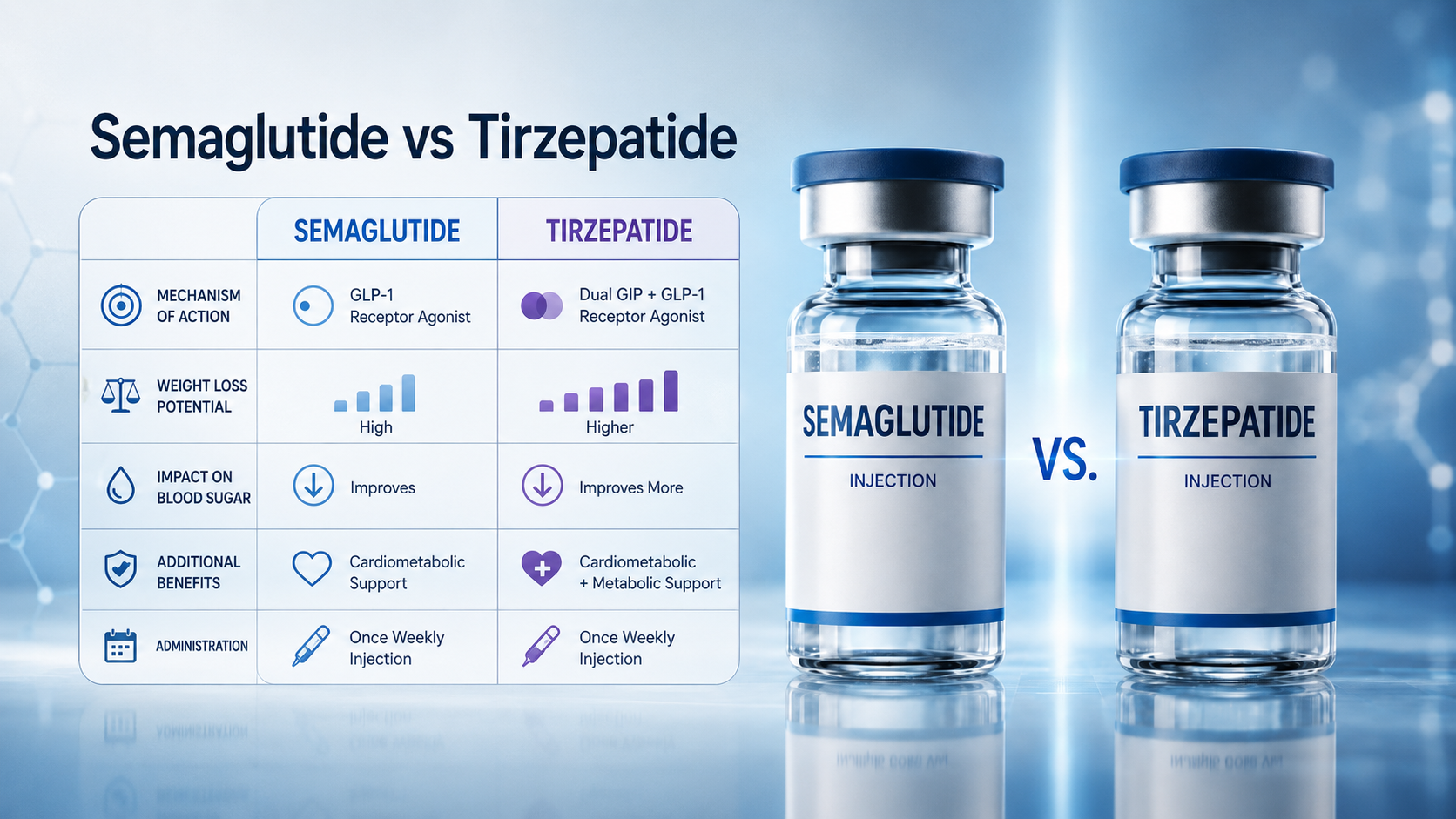
Tirzepatide and semaglutide are injectable, prescription medications that affect incretin hormones—natural peptides that help regulate blood sugar and appetite. Semaglutide acts primarily on the GLP‑1 receptor, while tirzepatide targets both GLP‑1 and GIP receptors. Both improve insulin response and reduce appetite, but tirzepatide’s dual action may offer additional metabolic benefits for some patients.
How Do GLP‑1 and Dual GIP‑GLP‑1 Receptor Agonists Work for Weight Loss?
GLP‑1 receptor agonists such as semaglutide increase fullness, suppress appetite, and slow gastric emptying, which together lower calorie intake and improve glucose control. Tirzepatide combines those GLP‑1 effects with GIP receptor activity, which can further improve insulin sensitivity and promote fat loss. For many patients, that combined pathway produces a broader metabolic response than GLP‑1 therapy alone.
What Makes Tirzepatide Different from Semaglutide in Medical Weight Loss?
The key distinction is mechanism: semaglutide is a GLP‑1 receptor agonist, while tirzepatide stimulates both GLP‑1 and GIP receptors. Clinical trials to date suggest that tirzepatide can lead to larger average weight reductions than semaglutide for many patients. Tolerability can vary—some people experience different patterns of side effects—so individual response and preferences matter when choosing therapy.
Ongoing studies and reviews continue to refine how these two therapies compare across populations and long‑term outcomes.
Tirzepatide vs. Semaglutide: Comparative Weight Loss Efficacy
A systematic review set out to compare tirzepatide and semaglutide for weight loss. Researchers searched PubMed, Scopus, and Web of Science on January 22, 2025 using terms including “tirzepatide,” “semaglutide,” and “weight loss,” identifying 751 records. After removing duplicates and screening titles, abstracts, and full texts, studies meeting eligibility criteria were included for analysis.
Comparative efficacy of tirzepatide vs. semaglutide in reducing body weight in humans: a systematic review and meta-analysis of clinical trials and real-world …, R Latif, 2025
What Are the Clinical Benefits and Weight Loss Outcomes of Tirzepatide and Semaglutide?
Both medications have shown meaningful benefits for weight reduction and related metabolic measures. Clinical trials report substantial average weight loss and improvements in conditions such as type 2 diabetes and hypertension. Reviewing these outcomes with your clinician will help identify which medication aligns best with your medical history and goals.
How Effective Are Tirzepatide and Semaglutide According to Recent Clinical Trials?
Recent trial data indicate tirzepatide can produce average weight loss in the range of about 15% to 20% of body weight over a 16–20 week span in many study populations. Semaglutide trials report average losses closer to 10% to 15% over a similar timeframe. These figures reflect averages—individual results depend on dose, duration, adherence, and lifestyle factors.
Separate analyses have examined tirzepatide’s detailed efficacy and safety profiles to help clinicians weigh benefits against risks.
Tirzepatide Efficacy: Weight Loss & Safety Outcomes
In randomized trials, weekly tirzepatide produced greater reductions in HbA1c and body weight than comparators, without a clinically significant increase in hypoglycemia or in serious or fatal adverse events. However, gastrointestinal effects and decreased appetite occurred more often with tirzepatide than with placebo or control treatments.
Efficacy and safety of tirzepatide, dual GLP‑1/GIP receptor agonists, in the management of type 2 diabetes: a systematic review and meta-analysis of randomized …, 2023
| Medication | Average Weight Loss | Duration of Treatment | Patient Demographics |
|---|---|---|---|
| Tirzepatide | 15–20% | 16–20 weeks | Adults with obesity |
| Semaglutide | 10–15% | 16–20 weeks | Adults with obesity |
This side‑by‑side view highlights tirzepatide’s potential advantage in average weight loss, while reminding clinicians and patients to consider individual needs and safety profiles.
What Patient Suitability Factors Influence Choosing Between These Weight Loss Medications?
Choosing between tirzepatide and semaglutide depends on medical history, coexisting conditions, treatment goals, and tolerance for side effects. Certain conditions—like a personal or family history of medullary thyroid carcinoma or pancreatitis—may influence eligibility. Motivation, expectations for weight loss, and willingness to accept possible gastrointestinal effects are also important. A physician‑led evaluation will help match the right medication to each patient’s health profile.
What Are the Side Effects and Safety Profiles of Tirzepatide and Semaglutide?
Both drugs are generally well studied and have predictable, mostly gastrointestinal side effects. Knowing what to expect and how side effects are managed helps patients start and stay on therapy safely.
What Common Side Effects Should Patients Expect with Each Injection?

Common early side effects reported with tirzepatide and semaglutide include:
- Nausea: Often temporary and tends to decrease with gradual dose escalation.
- Diarrhea: Can occur as the body adapts to the medication.
- Vomiting: Less common but possible, especially during initiation or dose increases.
Most side effects are manageable with dose adjustments, dietary guidance, and close follow‑up.
How Does Physician‑Led Monitoring Enhance Safety in Medical Weight Loss Treatments?
Regular, physician‑led monitoring ensures treatments stay effective and safe. Scheduled visits let providers track weight, metabolic labs, and adverse effects, then tailor dosing or add supportive therapies as needed. This hands‑on approach reduces risk and improves long‑term results compared with unsupervised use.
How Can Weight Loss Injections Be Combined with Hormone and Peptide Therapy for Optimal Results?
In some cases, clinicians combine GLP‑1/GIP therapies with targeted hormone or peptide treatments to address underlying metabolic or hormonal contributors to weight gain. For example, correcting thyroid dysfunction or optimizing sex hormones and using peptides that support muscle preservation can complement weight‑loss injections and improve sustainability. These combinations should be individualized and supervised by an experienced medical team.
Research continues into combined hormonal approaches to amplify weight loss while maintaining glucose control and metabolic health.
Combinatorial Hormone Therapies for Obesity & Weight Loss
Peptide hormones and proteins influence body weight and glucose regulation by acting on central and peripheral metabolic pathways that maintain weight and euglycaemia. Evidence from bariatric surgery outcomes and preclinical studies supports the rationale for using two or more agonists—or single co‑agonists—to treat obesity and type 2 diabetes. Mechanisms involving GLP‑1, glucagon, GIP, gastrin, islet amyloid polypeptide, and leptin can enhance weight loss while preserving glucoregulatory effects in experimental models of obesity and T2DM.
Emerging combinatorial hormone therapies for the treatment of obesity and T2DM
DM, DJ Drucker, 2013
Healthy Solutions Clinic is a physician‑led medical practice focused on individualized medical weight loss and comprehensive wellness services. We offer hormone optimization, peptide therapy, and IV infusions alongside evidence‑based weight‑loss medications, and we work with each patient to build a sustainable plan for health, function, and longevity.
Conclusion
Both tirzepatide and semaglutide represent significant advances in medical weight loss, offering effective options for patients seeking to reduce weight and improve metabolic health. Tirzepatide’s dual receptor action may provide greater average weight loss for some individuals, while semaglutide remains a well-established and effective therapy. Choosing the right medication depends on individual health profiles, treatment goals, and tolerance for side effects. Working closely with a healthcare provider ensures a personalized approach that maximizes benefits and safety for long-term success.
Frequently Asked Questions
What is the main difference between tirzepatide and semaglutide?
Tirzepatide targets both GLP-1 and GIP receptors, offering a dual mechanism of action, while semaglutide targets only the GLP-1 receptor. This difference may lead to greater weight loss with tirzepatide for some patients.
Are the side effects of tirzepatide and semaglutide similar?
Yes, both medications commonly cause gastrointestinal side effects such as nausea, diarrhea, and vomiting, especially during the initial treatment phase. These effects often improve with dose adjustments and time.
How long does it take to see weight loss results with these injections?
Clinical trials show significant weight loss over 16 to 20 weeks, with tirzepatide typically producing 15–20% average weight loss and semaglutide 10–15%, though individual results vary.
Can these injections be combined with other therapies?
Yes, weight loss injections can be combined with hormone optimization and peptide therapies under medical supervision to address underlying metabolic or hormonal factors and enhance overall results.